AI may soon help design the machines it needs to become more powerful. At Disrupt 2026, Ricursive Intelligence founders Anna Goldie and Azalia Mirhoseini will explore that possibility in a session titled “When AI Starts Designing Its Own Hardware.”
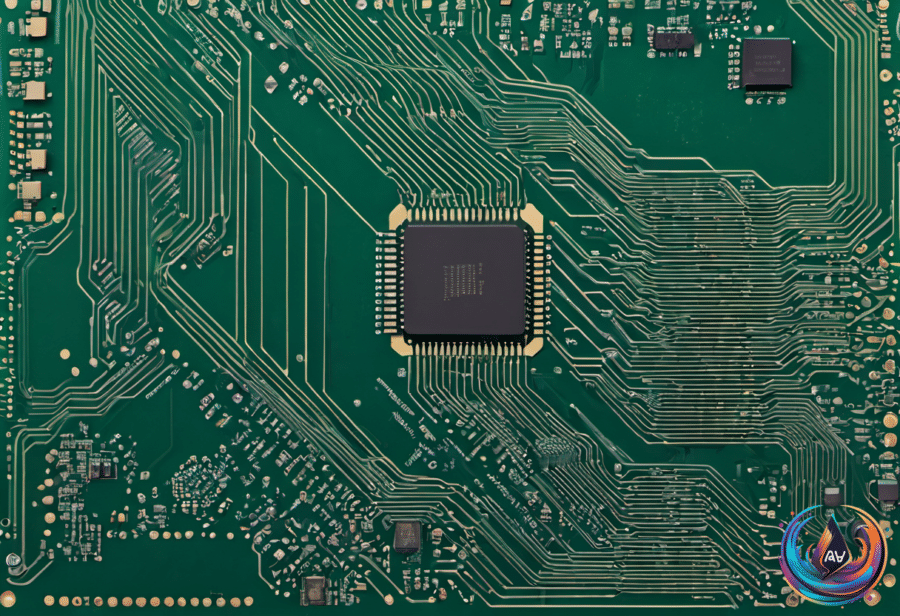
Ricursive Intelligence is developing AI that can design chips, learn from the design process, and improve the next design. The goal is to change a task that can take two to three years into a process that takes a matter of weeks.
A faster loop between AI and chip design
The company’s founders describe the challenge in simple terms: “AI needs increasingly powerful chips. But designing those chips is itself a slow, complex process.” That creates a loop at the center of the company’s work. AI needs better hardware, yet better hardware takes years to design.
Ricursive Intelligence’s system is intended to learn across different chips, rather than treat each design as a separate project. Each design can give the system information for the next one, allowing the company to build an AI process that improves from one chip to another.
That approach sits behind the session’s central question: “How fast can the AI-hardware loop move?” Ricursive Intelligence aims to reduce the chip design cycle to weeks, a target that puts learning and reuse at the center of its strategy.
The company launched in late 2025, then moved quickly to raise capital. Within four months, Ricursive Intelligence had raised $335 million at a $4 billion valuation, including a $300 million Series A. Nvidia is among its investors.
Founders with experience in AI hardware
Goldie is the founder and CEO of Ricursive Intelligence. She holds a Ph.D. in computer science from Stanford and was named one of MIT Technology Review’s 35 Innovators Under 35. Mirhoseini is the company’s founder and CTO, an assistant professor of computer science at Stanford, and the founder of Stanford’s Scaling Intelligence Lab.
The two founders previously co-led AlphaChip at Google. They also helped design Google Tensor Processing Units, giving them experience with AI systems and the specialized hardware that supports them. Before Ricursive Intelligence, Goldie and Mirhoseini were early employees at Anthropic and senior staff research scientists at Google DeepMind.
That background connects the company’s ambition to work the founders have already done. Their focus is not only on producing a chip design, but on creating a system that learns from the design process and applies that learning to future hardware.
Ricursive Intelligence’s funding gives the company room to pursue that goal while the chip industry faces the same basic tension its founders describe: AI needs more powerful chips, but chip design remains slow and complex.
Hardware is one part of Disrupt 2026
The chip discussion is part of a broader Disrupt 2026 program focused on AI’s role in hardware design and the challenge of putting AI into high-stakes, real-world environments. One question from the event captures that second concern: “When the consequences of failure are real, what does it take to deploy with confidence?”
That theme brings hardware and deployment into the same conversation. Ricursive Intelligence is focused on the systems that run AI, while other Disrupt participants represent work tied to robotics, autonomous systems, and real-world operations. The program includes Nathan Michael, CTO of Shield AI and a former member of Carnegie Mellon University’s Robotics Institute, along with Raquel Urtasun, founder and CEO of Waabi, and Mikell Taylor, director of robotics strategy at General Motors.
Disrupt 2026 is scheduled for October 13–15, 2026, with more than 10,000 founders, investors, operators, and tech leaders expected to attend. The event will feature 250+ speakers, 300+ exhibiting startups, and more than 200 sessions.
For people following AI hardware, Ricursive Intelligence offers a clear point of interest: the company is trying to make chip design an adaptive process instead of a long sequence that ends with one finished design. Its founders will bring that idea to the stage under a direct question: “What happens when AI starts designing its own hardware.”
Tickets are 25% off, with up to $200 in Disrupt ticket savings available through September 25, 2026, at 11:59 p.m. PT.
Based on