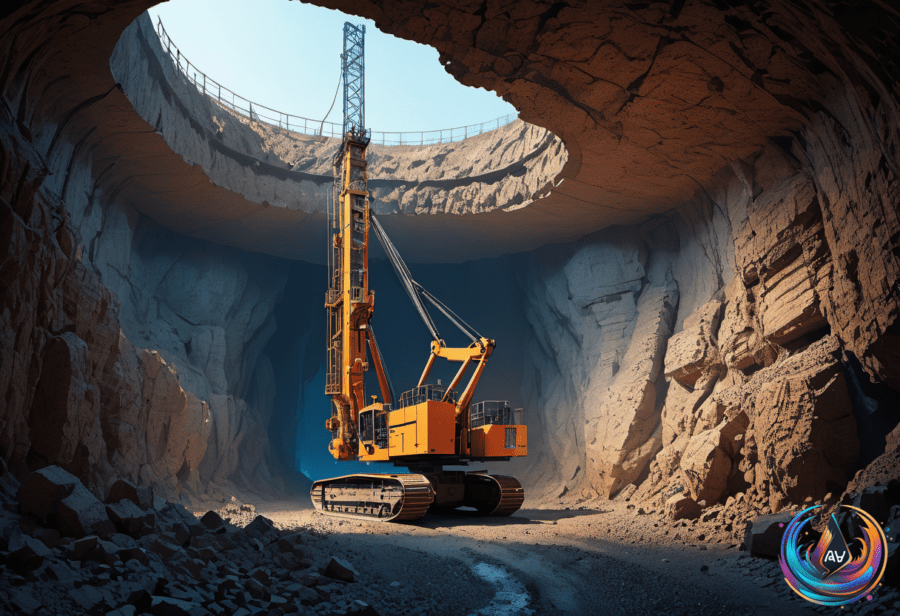
Deep beneath Earth’s surface, hydrogen may be moving through rocks in quantities far beyond what current projects produce. Researchers have estimated that trillions of tons of H2 are produced within Earth’s crust, creating a possible source of energy that has drawn attention from geochemists, drilling companies, and startups.
The idea is not limited to laboratory studies. Hydrogen is already flowing from mines, appearing in borehole tests, and showing up in exploration readings. The challenge now is working out how to connect these underground sources to useful production. As Barbara Sherwood Lollar, a geochemist at the University of Toronto, put it: “If we can set some smart minds into figuring out how to hook it up and use it, then we’ve got a win for this nascent economy.”
Hydrogen is already escaping from mines
Sherwood Lollar and her colleague Oliver Warr measured hydrogen released from boreholes at the Kidd Creek mine. Each borehole released an average of eight kilograms of hydrogen per year. When that result is extended across the mine, around 140 metric tons of hydrogen appear to flow out through its vents every year without being used.
Another mine offers an even larger example. In 2024, the Bulqizë chromium mine in Albania was reported to release at least 200 metric tons of hydrogen annually. These figures do not describe a finished energy system, but they show why underground hydrogen has become a subject of active research. Natural hydrogen is not only a theoretical possibility; it has been detected leaving working geological formations.
Laurent Truche, a geochemist at the University of Grenoble Alpes, and Jo Shannon, a geoscientist at the University of Southampton, are among the researchers examining what these underground sources may reveal. Shannon described one location in direct terms: “It’s bubbling with gas.”
The scale of the opportunity looks different when placed beside current production. Global hydrogen production reached approximately 100 million tonnes in 2025, while estimates point to trillions of tons produced within Earth’s crust. That comparison does not show how much hydrogen can be collected, but it explains why researchers and companies are testing ways to find and access it.
Drilling and rock-breaking tests expand the search
Some teams are looking for hydrogen that occurs naturally underground. Others are testing whether underground reactions can produce more of it. In 2024, a research team in Oman drilled a borehole and injected 50,000 cubic meters of water. The resulting gas was 90% hydrogen, giving researchers a clear result from a stimulated underground test.
Eden GeoPower is performing rock-breaking tests using electricity, with a simple description of its method: “We break rocks with electricity.” The work reflects a different route from finding a ready-made underground reservoir, since it focuses on using electricity to break rocks and examine the gas that follows.
Exploration is also moving into North America. Chapman Hydrogen and Petroleum Engineering planned exploration in Ontario in 2024. Denis Brière, the company’s vice-president, is connected to that effort, while Max Power, a Saskatchewan-based company, is drilling for natural hydrogen.
At the Lawson Complex in Saskatchewan, Max Power found 800 meters of continuous natural hydrogen readings. The company drilled its first well in December, with the year unspecified, and recorded hydrogen readings in July, also with the year unspecified. Those readings give the company a longer underground signal to study rather than a single isolated measurement.
A promising source with unanswered questions
Hydrogen already has several industrial uses. Chad Levesque, president and director of Max Power Mining, described it this way: “Hydrogen is a critical molecule for making ammonia, refining petroleum in gasoline and diesel and migrating toward more decarbonized energy sources.” He added, “And that’s where natural occurring hydrogen really comes into play.”
The potential appeal is clear: underground hydrogen could provide a source that is already present in Earth’s crust, while stimulated projects could test whether water and electricity help create usable gas. But the early results do not answer every question about scale, access, or practical use. The figures from Kidd Creek, Bulqizë, Oman, and Lawson Complex show activity in different settings, not one proven production method.
Emily Yedinak, a former ARPA-E Fellow involved in hydrogen research, is part of a field that is still building its evidence. Arnout Everts, a geoscientist and consultant, offered a careful assessment: “It’s way too early to tell whether or not this is going to be something really attractive.” For now, his view is simple: “We just let the research continue and see where it leads us.”
That research is taking place against a backdrop of huge underground estimates and growing exploration. The next step is not guessing how much hydrogen exists, but learning which sources can be measured, reached, and used. On August 17, 2026, underground hydrogen remains a possibility with striking numbers behind it—and a long way still to go.
Based on