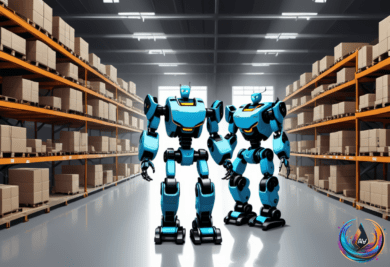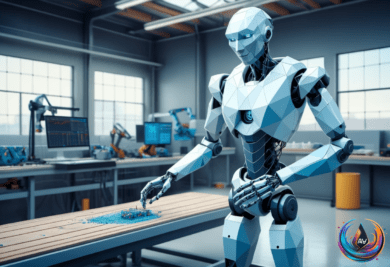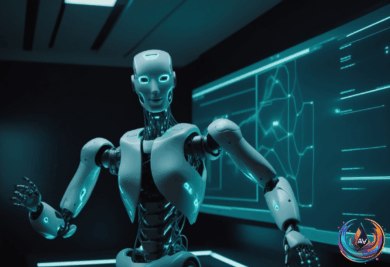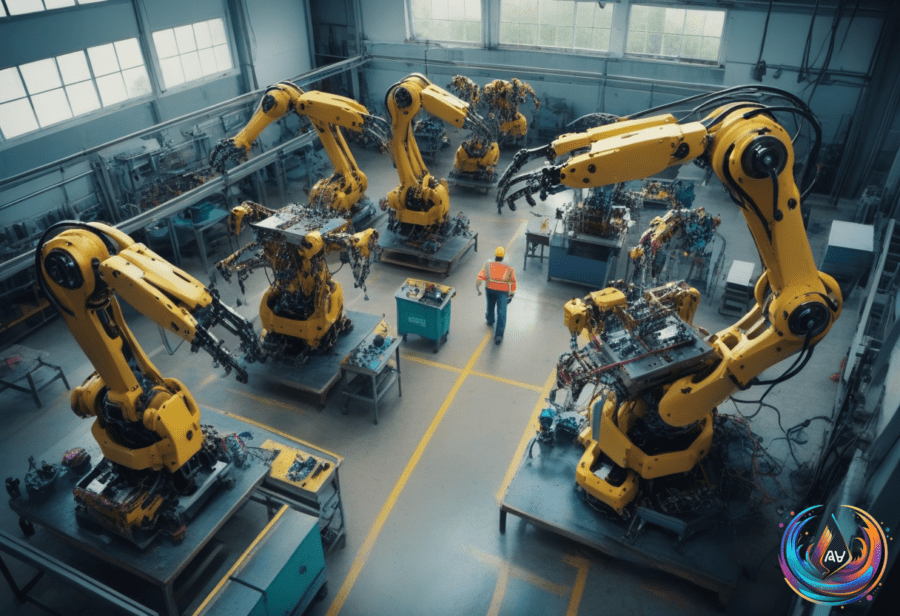
The United States has banned new imports of foreign-made humanoid and four-legged robots. The move, announced on July 28, 2026, targets mostly Chinese robots. Officials say the ban protects national security and supports the US AI and robotics industries.
The Federal Communications Commission (FCC) used equipment-approval rules to block these robots from entering the US market. The ban specifically covers new models of foreign-produced advanced robotic devices. This includes humanoid robots and quadrupeds that collect data. The FCC warned these machines pose “unacceptable risks” to national security. They said the robots could be used to spy on Americans or controlled remotely by hostile actors.
China dominates the humanoid robot market. Last year, Chinese companies accounted for 85% of humanoid robot deployments worldwide. Barclays, a British bank, reports that China shipped nearly 11,600 humanoid robots last year. In contrast, US firms shipped only a few hundred. The market for humanoid robots is still young, worth around $2 to 3 billion today, but Barclays predicts it could hit $200 billion by 2035.
Chinese robot maker Unitree Robotics is a key player in this space. Unitree’s four-legged robots cost about $4,600 each, far cheaper than US competitors like Boston Dynamics, whose robots cost around $278,000. Unitree’s devices have been used in Chinese army exercises. The Pentagon lists Unitree as linked to the Chinese military. There are also security concerns. Their robots have flaws that let attackers take control with voice commands and use one robot to command others.
Balancing Security and Industry Growth
US robot makers have pushed for this ban for months. They want to slow the spread of cheap Chinese robots and protect domestic companies. The Federal Trade Commission (FTC) also banned foreign-made humanoids to support America’s AI industrial policy. The ban allows US humanoid makers to apply for case-by-case import approvals. But many US companies still rely on Chinese parts or overseas assembly. That could disqualify them from selling in the US under the new rules.
Andrew Kang, CEO of RoboStrategy, said the restrictions create challenges that are “almost impossible to solve for in the short term.” Evan Beard, CEO of Standard Bots, said he’s been getting calls from customers asking where to find robots made in the US. Beard said, “Robotics is a technology America must lead and own — and foreign-subsidized robots will not be allowed to unfairly dominate US robotics…”
China’s Response and Market Outlook
Beijing condemned the ban. Mao Ning, a Chinese foreign ministry spokesperson, called it “protectionism” disguised as national security. China said it will take necessary steps to protect its companies. The FCC ban could become a bargaining chip in future US-China talks. It might pressure China to open its market or address security concerns.
Experts see the US as stronger in AI software — the “brain” of robots. China leads in making cheaper, better-moving robot bodies. Elon Musk said Tesla’s humanoid robot, Optimus, could become “the biggest product ever,” with sales possibly reaching $10 trillion long-term. Currently, humanoids cost about $100,000 each but could drop to $20,000-$30,000 as production scales. Combining market forecasts and price targets, the industry could sell 7 to 10 million humanoid robots annually by 2035.
Last year in Beijing, humanoid robots even beat humans in a half-marathon for the first time. That shows how far China has pushed robot development. Still, most commercial humanoid robots are early in their development. The new US rules aim to secure the domestic supply chain and build a stronger robotics industry at home.
Gavin Kenneally, CEO of Ghost Robotics, said, “If today’s announcement encourages stronger cybersecurity and a more level competitive environment, that’s good for customers and good for the robotics industry.” But some warn that protectionism won’t fix competitiveness alone. Georg Stieler said, “Restrictions can reduce security exposure, but they do not by themselves create a competitive domestic ecosystem.”
The ban could help American robot makers like Tesla and others gain ground. Bank of America forecasts about 90,000 humanoid robots shipped worldwide by the end of 2026. But the new FCC rules mean many of those from China will not reach US customers. This marks a new chapter in the global robotics race, where technology, security, and trade all collide.
Based on
- Trump’s AI protectionism has come for robotics — technologyreview.com
- Humanoid robots: Trump’s latest China trade battle? — dw.com
- FCC ban on new Chinese robots also hits US firms | Semafor — semafor.com
- US foreign robot ban to benefit Tesla, other American developers, analysts say | South China Morning Post — scmp.com
- Trump Expands Tech Crackdown on China Imports to Humanoid Robots – Business Insider — businessinsider.com