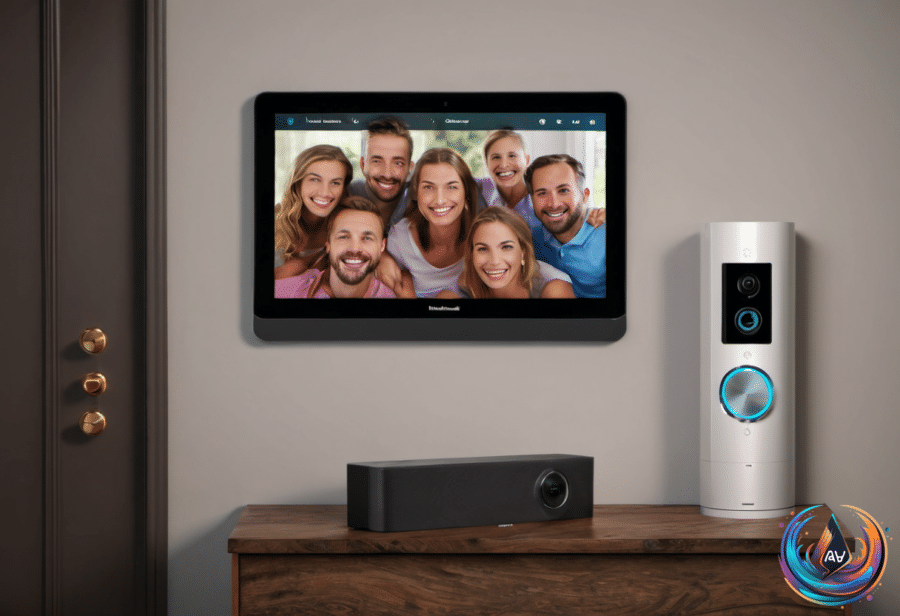
Apple has entered the smart display market. HomeView combines a smart speaker with a touchscreen display, Siri AI, and integration with Apple Home in a $299 device that arrives November 13, 2026.
Preorders are open now in the US, UK, Canada, Australia, New Zealand, Singapore, South Africa, and India. Buyers can choose silver, starlight, rose pink, or space gray, because apparently even the smart home needs a wardrobe.
HomeView launches with the Apple Home Collection, a new group of cameras, thermostats, and a door lock designed for Apple Home. The hardware push gives Apple a broader presence across the home instead of leaving the display to act as an expensive digital picture frame.
A display built around the home
The HomeView uses a 7-inch Liquid Retina display with a maximum brightness of 500 nits and a minimum brightness of 0.3 nits. A 12-megapixel FaceTime camera sits above the screen, while two speaker drivers occupy the display and a woofer with two force-canceling passive radiators handles bass in the base.
Apple offers a wall-mounted version for $299, with three mounting choices: plug-in, in-wall power, and in-wall PoE. The screen can show photo faces, clock faces, Snoopy faces, or a modular face with widgets, giving users several ways to make the device look busy even when the house is not.
HomeView supports up to six profiles and uses facial recognition to switch between them. The microphone and camera data used for profile recognition are processed on a Secure Exclave running on the device’s A18 chip, keeping that recognition work on the device.
The display also acts as a window into the wider Apple Home setup. It can show live feeds and footage from HomeKit Secure Video cameras, push a live doorbell feed when someone rings, and display up to nine live streams at once. That is a lot of windows for a seven-inch screen, but the option exists.
Apple’s Calendar, Reminders, Messages, and Music apps are supported, giving HomeView familiar ways to surface schedules, tasks, conversations, and audio. The device is not just a speaker with a screen attached; its display is built to present home information and camera feeds in one place.
Siri AI gets the central role
Siri AI on HomeView offers broad world knowledge, personal context, and natural language understanding. It is the same voice assistant as the upgraded version that arrived on the iPhone with iOS 27, placing the device within Apple’s wider Siri AI rollout rather than treating it as a separate experiment.
The assistant can handle requests involving smart home devices, but chained requests remain limited to specific device types. That restriction puts a boundary around the natural-language pitch: Siri AI may understand broader requests, yet home automation still has defined limits.
HomeView’s appeal rests on coordination. It combines profiles, camera feeds, Apple apps, Siri AI, and the new Apple Home Collection in one screen, with privacy hardware built into the profile-recognition system. Apple has finally made its smart home push tangible—now the $299 question is whether the home needs another screen to manage the ones already inside it.
Based on