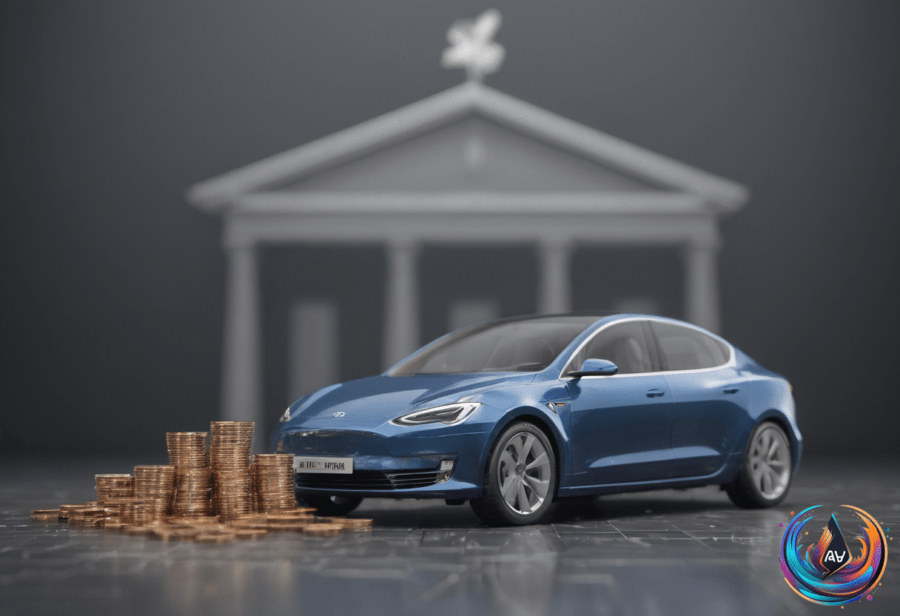
Electric vehicle batteries may have a longer working life than many drivers feared. At the same time, China is preparing a large capital injection for major state-owned banks and insurers as its economy faces weaker growth, falling construction activity, and soft consumer demand.
The two developments point to a similar question: how much financial confidence can durable systems provide when people and businesses remain cautious? For EV owners, the answer is becoming clearer through battery-health data. For China’s financial sector, Beijing is using public money to strengthen institutions that sit at the center of the economy.
Used EV batteries are keeping most of their strength
Most used EVs retain about 90 percent of their original usable battery capacity after 150,000 kilometers. That distance is close to the point where many drivers begin to worry about expensive battery replacement, yet the data show that capacity remains well above the warranty replacement threshold.
EV battery warranties typically cover eight years or 100,000 miles, or 160,000km. Under warranty, car manufacturers must provide a replacement battery if capacity falls below 70 percent. The latest results suggest that many batteries remain far above that level after substantial use.
Aviloo, a battery health analysis group, based its study on more than 500,000 tests carried out worldwide on 20 popular EV models between 2022 and 2026. The median state of health, or SoH, stood between 87 percent and 94 percent after 150,000 km. It ranged from 91 to 97 percent after 50,000 km and from 88 to 95 percent after 100,000 km.
The study did not include Chinese models because data was not available. It also showed that battery aging does not follow one fixed pattern. Climate conditions, battery size, and driver habits can all change the result from one vehicle to another.
For Nissan’s Leaf ZE1, the median SoH at 150,000 km differed by as much as 13.5 percentage points. The spread between individual cars reached up to 11 percentage points for Tesla’s Model Y, between 11 and 12 points for Volkswagen’s ID.4, and more than 12 points for Hyundai’s Ioniq 5.
Hot climates put more strain on batteries. Charging a vehicle to 100, 90, or 80 percent when it is parked also harms the battery. The ideal parked charge level is between 30 and 70 percent.
“Don’t park your cars with 100, 90 or 80 percent state of charge. It’s just harming the battery,” Marcus Berger said.
Battery health could also affect how used EVs are valued. “In contrast to a combustion engine car, where age and mileage would more or less carry the value of the car and technical condition, that’s not the case for an EV,” Berger said. James Strong said a nationally recognized battery state of health standard would strengthen confidence in the used EV market and improve transparency for consumers.
China prepares another major financial injection
China has announced around 360 billion yuan, or US$54 billion, in capital injections for eight of its largest state-owned banks and insurers. Three state banks will receive a combined 290 billion yuan: Agricultural Bank of China will raise 160 billion yuan, Industrial and Commercial Bank of China will raise 100 billion yuan, and Export-Import Bank of China will receive 30 billion yuan.
The Ministry of Finance will inject another 70 billion yuan into five insurance firms. The group includes China Life Insurance Company, the People’s Insurance Company (Group) of China, and China Export & Credit Insurance Corporation. The injections are funded through the issuance of 300 billion yuan in special treasury bonds.
This marks the second capital injection by Beijing in as many years, following a 520 billion yuan injection in March 2025. Liao Zhiming described the recapitalisation of major state-owned financial institutions as “a policy arrangement for the past two years, rather than an emergency measure.”
The move comes after China’s six largest state-owned banks reported their first simultaneous rise in half-year revenues and net profits since 2022. Their first-half net profit increased by 4 to 6 percent, while revenue increased by 4 to 11 percent. Net interest margins also rose after two years of compression, reaching an industry average of 1.4 percent in the first quarter of the year.
Citi analysts said the smaller package for insurers showed healthier capital positions and a lower need for aggressive replenishment. Cheng Tan said low interest rates are eating into insurers’ profits and weakening their financial buffers, but added that more capital gives insurers more room to invest in stocks.
Capital support meets weaker economic data
China’s financial measures arrive as economic activity loses momentum. Second-quarter growth fell to 4.3 percent, the lowest level since late 2022. New-home sales by floor area fell 12.7 percent year on year in the first seven months, while construction investment fell 19.2 percent after an 18 percent contraction in the first six months.
Retail sales growth slowed to 0.6 percent in July, and fixed-asset investment declined by 6.7 percent during the January-July period. The National Development and Reform Commission urged faster work on 109 major projects and stronger financial backing for infrastructure upgrades.
Around 61 percent of this year’s government bond quota of 11.9 trillion yuan had been issued by the end of last week, up from 56 percent a week earlier. Larry Hu said the main constraint on bank lending is not a lack of capital but a lack of credit demand.
China’s capital adequacy ratio stood at 15.26 percent in June, while core Tier-1 capital stood at 10.72 percent. Yet official figures do not show the full debt picture. Hidden debt held through local government financing vehicles totaled 14.3 trillion yuan, or US$2.1 trillion, equal to 10.6 percent of gross domestic product at the end of 2023. The IMF estimates that LGFV debt is three to four times higher than the official figure.
China began debt swaps in 2024 to refinance 10 trillion yuan in hidden debt over five years, and more than 71 percent of LGFVs were reclassified after becoming market-based non-financial corporations. The IMF projects China’s general government debt-to-GDP ratio will rise from 117 percent in 2024 to 163 percent in 2034.
Based on