The Neil Gehrels Swift Observatory, launched in 2004, is a vital tool for studying gamma-ray bursts. These bursts are the most energetic explosions in the universe. Swift spots them quickly, alerting other telescopes worldwide. But Swift is running out of time.
Its orbit is shrinking because it has no thrusters to keep itself up. Earth’s atmosphere, though thin at Swift’s altitude, still creates drag. Recently, strong solar activity heated and expanded the upper atmosphere. This made the drag worse and pushed Swift’s orbit down faster than expected.
NASA estimates Swift will fall below a safe altitude by this fall. Once it dips too low, it will burn up during reentry. Losing Swift would mean losing a unique observatory that’s still useful after two decades.
Building a Rescue in Record Time
To save Swift, NASA challenged companies to build a rescue satellite in under a year. The mission had to be affordable and fast. Katalyst Space Technologies, a startup founded in 2020, won the contract. They designed Link, a small satellite with robotic arms to grab Swift and boost its orbit.
Work started last September. By June 2026, less than ten months later, Link was ready for launch. It’s a race against time. Link must reach Swift before its orbit falls below 300 kilometers, the limit for a safe capture.
This timeline is unprecedented. NASA’s Shawn Domagal-Goldman praised the teams for moving fast despite risks. “No one thought we would get this far,” he said. The mission shows what can happen when urgency meets innovation.
The Challenge of Capturing an Unprepared Satellite
Swift was never built to be serviced in space. It lacks docking rings or grappling points. Link’s robotic arms must latch onto small metal flanges meant only for ground handling before launch. No pre-launch photos exist of Swift’s backside, so Link’s sensors must map the surface in real time.
Link will approach slowly, with Swift still operational and controlling its orientation. This cooperation helps the docking attempt. Link has three robotic arms but only needs one to secure Swift. It will inspect multiple capture points to avoid debris or damage.
Once attached, Link will fire its ion thrusters to push Swift back to its original orbit around 600 kilometers. This boost could extend Swift’s mission by a decade or more. The operation is risky but necessary to keep Swift flying.
Kieran Wilson, Link’s principal investigator, said the biggest risk was missing the launch window. Now that Link is ready, the team can focus on the complex rendezvous. They remain confident the spacecraft can handle challenges during the operation.
A Model for Future Space Missions
This mission marks a breakthrough in satellite servicing. It is the first time a commercial company will autonomously capture and reboost a government science satellite that wasn’t designed for service. It pushes the boundaries of what’s possible in space logistics.
NASA plans to use lessons from this mission for future efforts, including potentially servicing the aging Hubble Space Telescope. The ability to extend satellite life instead of replacing them saves billions of dollars and valuable science time.
Beyond science, this capability has national security benefits. It proves the US can respond swiftly to protect vital space assets. The mission shows how commercial startups can work with government agencies to solve tough problems fast.
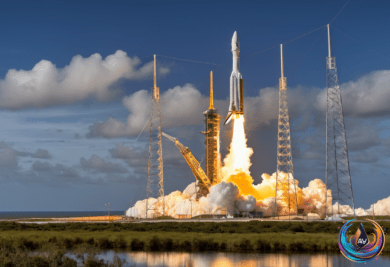
As Link prepares for launch on a Pegasus XL rocket from the Marshall Islands, the space community watches closely. This mission is a bold test of technology and teamwork. If successful, it will change how we maintain satellites in orbit and keep space science alive.
Based on
- A bold satellite rescue mission came together in record time, but will it work? — arstechnica.com
- Swift reboost mission ready for launch – SpaceNews — spacenews.com
- High-Stakes Rescue: Commercial Satellite Servicer Encapsulated for Swift Telescope Orbital Boost – SatNews — satnews.com
- NASA’s Swift Satellite Rescue: A Record-Breaking Mission (2026) — lcua.org
- Swift reboost mission ready for launch – Science and Aerospace — scienceandaerospace.blog