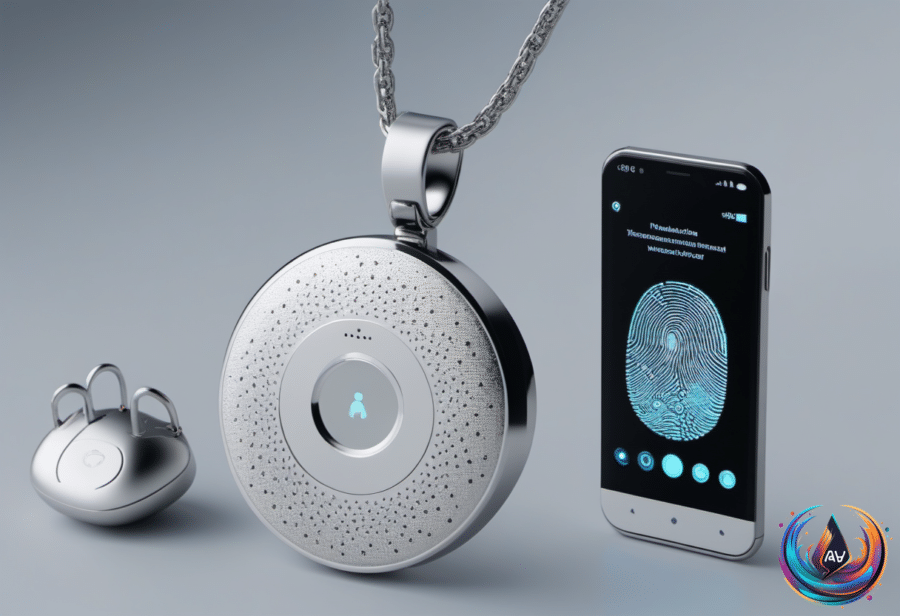
Meta is shrinking its AI ambitions into a device that can ride on a keychain. The new Muse Charm puts real-time voice interaction, a digital avatar, and Meta’s Muse AI agent inside a small pendant-like gadget designed to stay ready whenever users want to talk.
Mark Zuckerberg revealed the Muse Charm on September 23, 2026, during Meta’s annual Connect event at the company’s headquarters in Menlo Park, California. Meta plans to ship it in December 2026, in time for the holidays, but Zuckerberg said only a few units have been built so far.
A Keychain-Sized Doorway to Muse
The Muse Charm is pocket-sized, lightweight, and small enough to attach to a keychain. Users tap its fingerprint sensor to access Muse directly, skipping the steps of unlocking a phone or opening an app. That simple action is central to the device’s appeal: the AI agent is always within reach, but the user does not need to pull out a smartphone first.
“You just go ahead and tap here in the fingerprint sensor in the corner, and you can start talking without having to unlock a phone or open an app,” Zuckerberg said.
The Charm includes a 2-inch, or 5-cm, screen that shows Muse’s digital avatar, called Jolly. The device also has a small camera, at least three microphones, and a built-in 5G modem. It cannot make calls, but its real-time voice interaction lets users speak with Muse and receive responses through the device.
Meta describes the experience as personality-filled, with a quasi-Tamagotchi feel. Instead of treating the hardware as a plain access point, the company has given Muse a visible digital identity that lives inside the palm-sized totem users can carry in their pockets or attach to a keychain.
“We packed the whole Muse experience, including the whole real-time voice and avatar stack, into something that fits on a keychain and is always available to talk to,” Zuckerberg said.
Muse Moves to the Center of Meta’s AI Push
Muse has become the “centerpiece” of Zuckerberg’s AI vision, and its rise has changed the momentum of Meta’s AI investments. Development of Muse was first revealed in May, and the assistant has now reached the top of both the Apple and Android app stores in the US since its launch two weeks ago.
Meta has announced new capabilities for Muse, including live conversations and control over an email address. The company also plans to bring Muse to its glasses and enable a digital avatar for video calls, extending the assistant beyond the Charm and into more parts of Meta’s device ecosystem.
“If you’re not wearing glasses, this is going to be by far the fastest way to talk to your Muse and to show what’s going on around you,” Zuckerberg said.
The broader hardware push reaches beyond the Charm. Meta’s glasses will be available next spring for $1,300, while its virtual reality glasses will be five times lighter than the previous Quest 3 model. Together, these plans show Meta building several routes into the Muse experience: a wearable on the face, a device on a keychain, and an avatar inside video calls.
That strategy has already brought a major shift in Meta’s market story. The company’s share price fell by more than a quarter between last September and the beginning of August, then bounced back after the September 8 launch, adding $300 billion to Meta’s market capitalization.
Convenience Brings New Questions
A device that listens for conversations, sees through a camera, and connects to an AI agent creates a powerful promise, but it also raises security concerns. Meta has issued a fix for a vulnerability that could allow a hacker to take control of a Muse agent.
Platform access has become another challenge. Amazon has blocked Meta’s agents from accessing its shopping platform, limiting where those agents can act on a user’s behalf. The Charm therefore arrives with a clear mix of ambition and boundaries: it can make Muse easier to reach, but the agent still depends on the rules and defenses surrounding connected services.
Meta’s holiday target gives the company only a short path from demonstration to delivery, especially with only a few Muse Charm units built so far. The device must bring together its fingerprint sensor, camera, microphones, screen, 5G modem, voice system, and avatar in a lightweight package that feels natural to carry.
That is the bet behind the Charm. Meta wants Muse to move from an app users open into an assistant users simply tap, hear, and carry. If the company can turn that gesture into a dependable habit, the keychain may become the next front door to its AI agent.
Based on
- Meta puts its AI assistant on a keychain — arstechnica.com
- Meta is making a standalone Muse AI gadget | The Verge — theverge.com
- Meta’s Charm gadget carries CEO Zuckerberg’s big AI ambitions | Reuters — reuters.com
- Meta made a Tamagotchi-like wearable for its Muse AI agent | TechCrunch — techcrunch.com