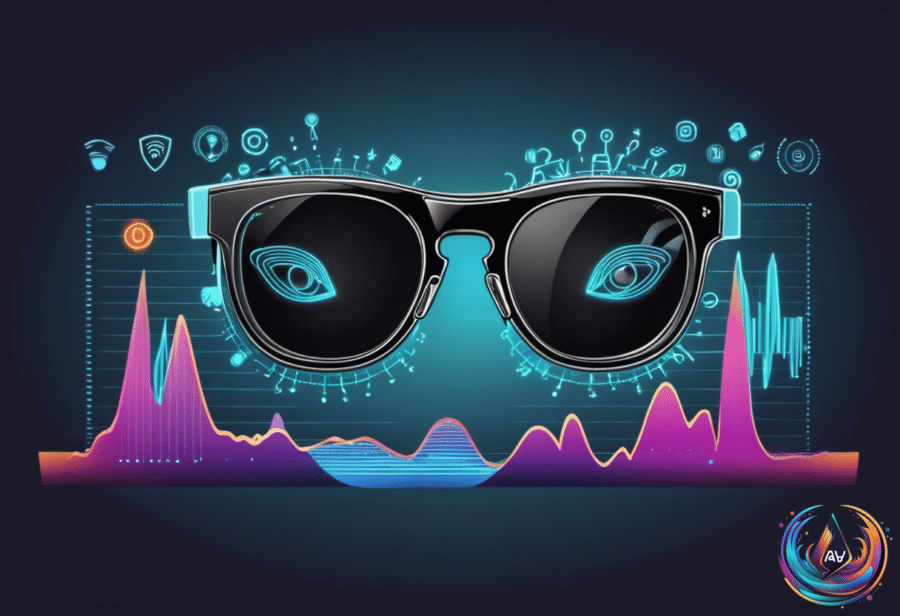
Smartglasses can listen, recognize voices, and support people who face vision or memory loss. That promise comes with a serious question: what happens when wearable technology turns nearby conversations into biometric data?
Continuous audio recording creates privacy concerns that may reach beyond the risks linked to cameras. Ambient surveillance could capture accidental gossip, enable dangerous voice-matching applications, and expand vulnerability to AI-powered surveillance and misuse. As smartglasses bring voice recognition into more moments of daily life, consent becomes central to the technology’s future.
When Smartglasses Listen Beyond Their Users
Smartglasses raise a distinct privacy problem because their audio capabilities can reach people who never chose to interact with them. A camera can capture an image, but continuous audio recording may collect spoken words from conversations happening around the wearer. That difference gives voice-enabled wearables a powerful reach.
Ambient surveillance introduces the risk of accidental gossip recordings. A private comment, an unplanned conversation, or a nearby exchange could become part of an audio record without the speaker’s knowledge. The concern does not depend on whether someone intends to record another person; the wearable’s ability to listen creates the risk on its own.
Voice also carries another layer of sensitivity. Voice-recognition technology can support identification, so an audio recording may connect speech with the person who produced it. Dangerous voice-matching applications could turn that capability into a tool for misuse, especially as expanded voice recording increases vulnerability to AI-powered surveillance.
The result is a privacy challenge built into ordinary surroundings. Smartglasses do not need to focus on a single conversation to create concern, because ambient surveillance can capture speech as people move through shared spaces.
The Benefits Make the Debate More Urgent
Voice recognition offers clear personal and medical benefits for individuals experiencing vision or memory loss. For these users, voice-based technology can provide meaningful support, making spoken interaction an important part of how smartglasses may help with daily needs.
That value makes the privacy debate harder, not easier. The same technology that can assist someone with vision or memory loss can also create concerns for people whose voices are collected, recognized, or matched without consent. A single capability can bring help to one person and risk to another.
This tension means the question is not simply whether smartglasses should use voice recognition. The bigger question is how voice use and identification should happen when other people enter the listening range. The benefits are real, but so are the risks created by continuous recording and ambient surveillance.
Expanded recording can expose more voices to AI-powered surveillance and misuse. When voice recognition connects audio with identity, the consequences reach beyond a forgotten conversation. The technology can affect personal privacy, medical privacy, and the privacy of people who never put on the glasses.
Consent Laws Are Moving Into Focus
Several states and cities already enforce biometric data collection laws that require speaker consent for voice use and identification. These laws place consent at the center of voice technology, especially when a system can collect speech from people nearby.
That legal focus matters because smartglasses can bring biometric collection into ordinary interactions. A person may know that a wearable is present but still not know whether it is recording audio, using a voice for identification, or supporting a voice-matching application. Speaker consent addresses that gap by focusing on the person whose voice is involved.
- Continuous audio recording creates privacy concerns for people near smartglasses.
- Voice recognition can provide personal and medical benefits for individuals experiencing vision or memory loss.
- Ambient surveillance may capture accidental gossip recordings.
- Dangerous voice-matching applications create another path for misuse.
- Expanded voice recording increases vulnerability to AI-powered surveillance.
- Several states and cities require speaker consent for voice use and identification through biometric data collection laws.
The challenge ahead is balancing assistance with control. Smartglasses can support people with vision or memory loss, yet their listening abilities can expose voices in shared spaces. Consent gives states and cities a way to address that conflict while voice-enabled wearables continue to raise new privacy questions.
As of Oct 15, 2026, the central issue is clear: smartglasses are not only a camera privacy story. Continuous audio recording, voice recognition, and biometric identification create a broader debate about who gets to collect, use, and match a person’s voice.
The next phase of smartglasses will test whether convenience and medical value can grow without making ambient surveillance feel unavoidable. The technology’s promise is powerful, but its future will depend on how seriously it treats the voices surrounding the wearer.
Based on