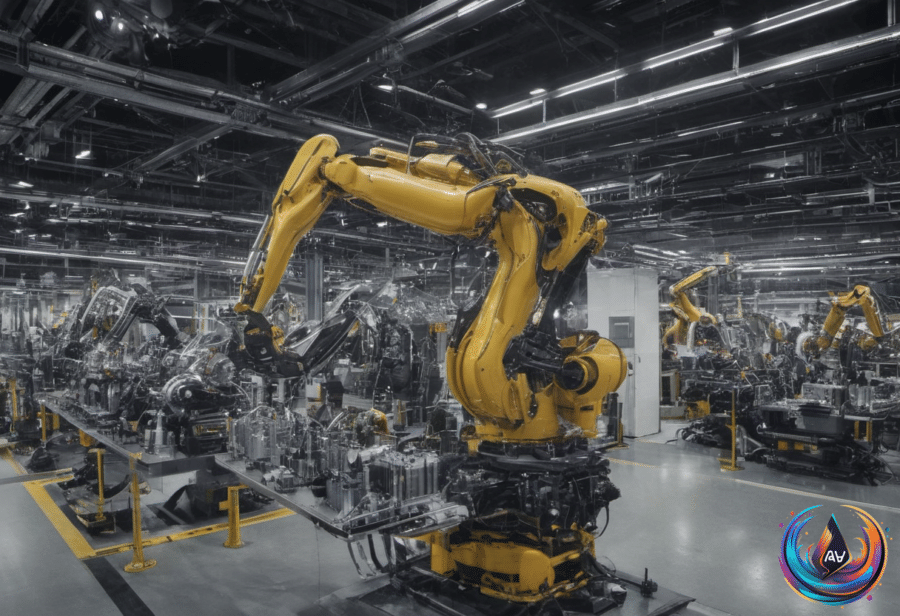
Toyota is putting a huge number on the future of factory automation: around 400,000 robots and about 1 trillion yen ($6.4 billion) in annual spending from 2028. The estimate turns factory robotics into a major industrial shift, reaching beyond individual production lines to Toyota factories, group companies, and major suppliers.
The plan is not confirmed as a full investment commitment. Toyota has not said whether the entire amount will proceed or how many years spending at that level would continue, but the scale of the estimate shows how far automation could expand across its manufacturing network.
A 400,000-Robot Industrial Push
Toyota discussed the potential investment with investors earlier in September. The estimate covers robots needed to replace existing machines as well as robots installed in new locations, bringing both humanoid and non-humanoid systems into the same picture.
That broad scope matters because Toyota is not describing one robot for one task. The potential investment spans industrial robots, automated logistics, and future human-robot collaboration on factory floors. Parts could move through plants using automated systems, while robots could support picking and other manufacturing work.
The number also connects robotics to the wider structure of Toyota’s operations. The estimate reaches across the company’s factories, group companies, and major suppliers, creating a possible automation program that extends through the production network rather than stopping at Toyota-owned facilities.
At about 1 trillion yen, or $6.4 billion, each year, the potential spending would give physical automation a central role in Toyota’s manufacturing plans from 2028. The company’s estimate places robots at the heart of factory expansion, equipment replacement, and new forms of work on production floors.
Kamigo Shows How Toyota Builds Automation
Toyota already uses and tests robotics across several manufacturing processes. In its FY2026 financial results, the company listed factory demonstrations involving parts transportation and parts picking, along with robotics work in areas such as medical equipment transportation.
The clearest example sits at Toyota’s Kamigo Plant, where a piston assembly line began operating with robots in January 2025. That line has since moved from three operators to full automation, showing how a production process can change through a focused robotics project.
Kamigo’s automation work did not begin with that piston line. Toyota started using robots on selected sub-lines at the plant in 2008, giving the company years of experience to draw on as it expanded the system.
The path was not a straight march toward more machines. Toyota encountered maintenance constraints as it expanded engine production overseas, and some overseas facilities lacked enough skilled maintenance workers to support the systems. In response, some processes returned to manual production while manufacturing knowledge moved to overseas sites.
That manual work became part of the automation strategy rather than a dead end. Workers developed jigs and tools that could double or triple efficiency in some manually operated processes, while knowledge from those processes helped Toyota develop newer automated production systems, including the piston assembly line at Kamigo.
Robots, Skills, and the Next Factory
Toyota’s experience points to a factory model where automation depends on more than purchasing machines. Robots must fit production processes, maintenance teams must support them, and workers must understand how each task works when conditions change.
The Kamigo example shows why manual manufacturing knowledge can remain important even as automation expands. Workers improved processes with jigs and tools, and Toyota used that knowledge when developing newer automated systems. The result connected human experience with robot deployment instead of treating the two as separate paths.
The 400,000-robot estimate also includes humanoid systems, adding another layer to the story. Toyota has not said how many humanoid robots would form part of the total, but the figure confirms that both humanoid and non-humanoid machines are included in its view of future factory automation.
Toyota is not alone in exploring that direction. Hyundai plans to deploy humanoid robots at its US plant in Georgia from 2028, placing that timeline alongside Toyota’s projected start for its potential annual robotics spending.
The next stage will show whether Toyota turns the estimate into a sustained investment program. For now, its manufacturing history, current factory demonstrations, and Kamigo’s move from three operators to full automation reveal a clear direction: robotics is moving from isolated production experiments toward a much larger role across the industrial system.
Based on