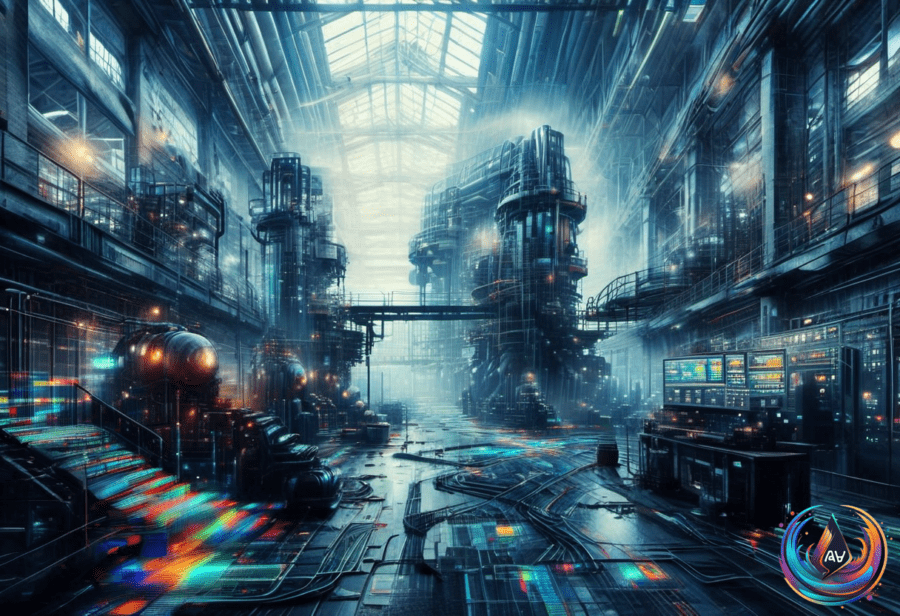
AI writing code is no longer a surprise. It’s reality. What happens when AI not only writes code but manages the whole process on its own? We’re stepping into a new era of coding where machines act like invisible engineers, running “dark factories” that hum without human oversight. This is happening now, and it’s shaking up how we think about software development.
The Rise of Autonomous AI Coding
Simon Willison, a developer who’s deep in the trenches of AI coding workflows, revealed he uses AI for most of his programming. He’s not alone. These AI systems can build features, write documentation, and even validate complex schemas. Imagine having an assistant that crafts entire projects while you focus on the big picture.
But it’s not just assistance anymore. AI can take over the entire coding pipeline. This “dark factory” concept means AI runs the show without humans watching every step. It’s a bold leap. Trusting AI with everything from writing to testing code challenges our usual control over software creation. Are we ready to hand over the keys?
Trust and Risks Behind the Curtain
Here’s the catch: AI doesn’t truly “understand” code. It’s brilliant at syntax and patterns but clueless about why things work. Mark Little explains AI can pump out boilerplate faster than you can grab coffee but misses architectural vision. That gap matters.
Fault-tolerant, distributed systems demand rock-solid reliability. Experts estimate AI would need 500,000 expert-level training examples to be trustworthy in this high-stakes zone. That’s a mountain of data to climb before AI gains full trust in critical software.
Even then, AI can hallucinate. About 45% of code snippets it generates invent fake libraries or slip in huge security holes. And guess who’s responsible if that happens? It’s the human developer, not the AI.
To add fuel to the fire, some licenses for popular AI coding tools like Microsoft’s Copilot say it’s for “entertainment purposes only.” That’s a warning sign that these tools aren’t guaranteed safe or reliable for serious work.
AI’s Impact on Jobs and Industry Moves
Companies like Klarna, IBM, and Oracle have already linked layoffs to AI’s rise. The fear that AI will replace human jobs isn’t just talk anymore. It’s real and spreading fast. As AI handles more coding, roles will shift and some may vanish.
On the flip side, AI can save 50-70% of time spent on repetitive tasks like automated testing, code reviews, and bottleneck detection. This frees developers to focus on creativity and complex challenges. The future might not be humans vs. AI, but humans working alongside smarter machines.
New Models and Tools Changing the Game
Anthropic’s Claude Sonnet 5 is a shining example of AI progress. It claims top-tier performance with a massive 1 million token context window. It generates about 30% more tokens than its predecessor, Sonnet 4.6, but costs more—1.28 times for Python code and 1.42 times for English text.
Simon even tested Google’s Gemini 3.1 Flash Lite Image, a fast and cheap image model internally called “Nano Banana 2 Lite.” This shows AI’s reach is expanding beyond code into images and more.
The US Department of Commerce recently lifted export controls on Claude Fable 5 and Mythos 5. Anthropic will restore access to these models soon, opening doors for innovation worldwide.
Understanding to Participate
Simon Willison shares a vital insight: “You need to understand the code to a depth that enables you to participate further with the model.” You can’t just hand off work to AI and check out. You must keep up, learn what the AI is doing, and stay active in the process. This avoids “cognitive debt” where your knowledge drifts from reality.
Geoffrey Litt, a speaker at AIE, emphasized the challenge of collaborating with coding AI that makes large, complex changes. Developers must stay sharp to keep the codebase healthy and aligned with goals.
What’s Next for Developers and AI?
AI’s coding revolution is here. The “dark factory” might soon power entire software projects. But trust won’t come overnight. Developers must understand AI’s limits, catch hallucinations, and guard security.
Will AI replace coders or become the ultimate coding partner? The answer depends on how we adapt. Those who grasp what AI does and participate actively will thrive. The rest risk losing control to machines that run silently in the background.
The future is bright but demands vigilance. AI will change coding, jobs, and industry forever. Are you ready to jump in and lead the charge?
Based on
- Understand to participate — simonwillison.net
- Mark Little’s WebLog: Recent keynote sessions on AI and developer relevancy — markclittle.blogspot.com
- What Your AI Agent Should Read Before It Writes a Singl | Dev.to AI — DeepCamp — deepcamp.cc
- Simon Willison | MacWorks — macworks.dev
- Simon Willison Predicts the ‘Dark Factory’ Era: AI Takes Over Coding & Automation (2026) — lescroisieresendouce.com