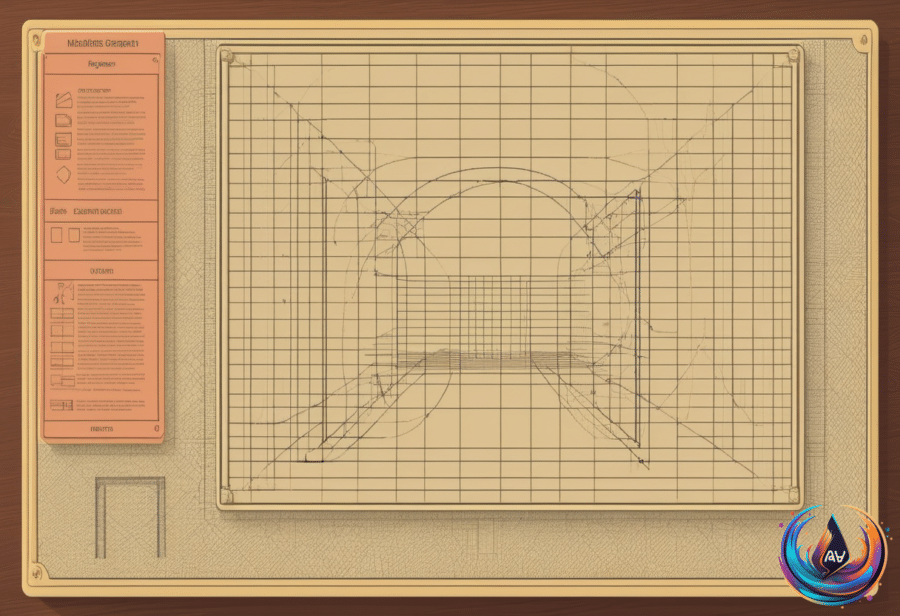
AI image generation is entering a new phase. Instead of producing a finished bitmap and asking users to describe every change, newer language models can create illustrations by writing code. That shift makes the result easier to edit, reuse and adapt across different formats.
An interesting trend in frontier language models released during the second half of 2026 is their stronger visual reasoning and design ability. Models such as Gemini 4 Neon can create useful 2D images, and the same approach can extend to 3D models, diagrams, game assets, websites and interface components.
The key difference is control. When an image is defined with code, a person or a model can change one part without disturbing everything else. Text remains text, shapes remain shapes and individual elements can be adjusted instead of being rebuilt from scratch.
Why Code-Driven Images Offer More Control
Most AI image tools use models that output bitmap graphics. Stable Diffusion, DALL-E and Midjourney helped lead that approach, while Google’s Nano Banana and OpenAI’s ChatGPT Images brought language-model-driven image editing into the same conversation during the past 15 months. These systems have become capable at editing existing images and preserving details, but they still produce glitches that become visible when viewers zoom in.
Text is another weak spot. Bitmap image models create letter shapes directly, so the result does not have the guaranteed consistency of a real font-based typography system. Their output is also flat: users can describe a change or draw an annotation, but they cannot select a single layer and manipulate it with precise control.
Code-driven images solve these problems by turning the visual result into something editable. An SVG can be changed as text or opened in Inkscape, Adobe Illustrator or Boxy SVG for visual editing. AI Studio does not render SVGs, so models working there cannot spot visual mistakes without assistance, but the numbers used in one test came from Google searches and were checked for accuracy. The final result was solid because every part remained available for revision.
Ideogram 4.0 has also claimed “bounding-box layout control” through structured JSON prompting, showing that dedicated image models are exploring better ways to manage composition. Still, code offers a broad editing system rather than a single control feature.
A model connected to a coding-agent environment can execute code and produce image files, HTML and CSS, 2D HTML Canvas elements, Blender scripts, WebGPU shaders and PDFs. Any image mechanism represented by a file on disk or by a script’s output can become a target.
From Diagrams to Games and Presentations
This approach is useful for more than illustrations. Ensar Aydemir, an endocrinologist at Sultan 1. Murat State Hospital in Edirne, Türkiye, describes using generative AI to turn hand-drawn scientific diagrams into digital formats without giving up control. The model reads a photographed sketch, interprets its structure and converts it into editable diagram code.
Aydemir’s workflow uses formats such as Draw.io-compatible XML or Mermaid syntax. The result can be imported into a diagram editor, where every box, label and connector remains editable. In this role, AI acts less like an illustrator and more like a compiler that translates human instructions into code a computer can run.
The same logic is changing game development. Claude Opus 5.5, GPT-6 Astra and Gemini 4 Neon can create good-enough game assets such as 3D models, textures and sprites through code. Tweaking, reusing and remixing those assets then becomes a matter of writing more code, which helps explain why vibe game development has grown.
Anthropic has also shown how far this idea can reach through Claude, Claude Design and visually compelling presentations and website designs. The business world still runs on PowerPoint, so design tools remain important for enterprise contracts. The surprising part is that a specialist image model is not always necessary when a text-output model can handle visual design by writing code.
Dedicated image models still have a place for photorealistic images. For explanatory diagrams, editable posters, user-interface components, visualizations and game assets, code-driven images offer a stronger fit because the underlying structure remains available.
More Capability Brings New Questions
The same ability to generate structured outputs is spreading into research. Claude and ChatGPT can produce inventories of research results and manuscripts at a pace that humans cannot peer-review. OpenAI deployed 10,000 algorithmic agents on the Navier-Stokes Millennium Problem and generated a 166-page proof. An Anthropic mathematician later claimed a solution to the Riemann Hypothesis, a problem that had challenged mathematicians since 1859.
These examples raise a problem beyond speed. Working through mathematics gives young researchers practice, much like weightlifting builds a bodybuilder’s strength. If AI automates the reasoning, researchers may explore more problems while getting less practice developing discovery skills.
That tension may force universities to change how they judge achievement. Output alone may no longer be enough, and oral interviews with peer cross-examination could test whether researchers understand breakthroughs created with digital collaborators. OpenAI has also made ChatGPT for Academic Researchers available at no cost to up to 200,000 faculty researchers and their students.
The costs can be large. The candidate solution to the Navier-Stokes Problem has been estimated at as high as $15 million, compared with a $1 million prize for a successful result. AI may expand the number of problems people can explore, but computing power, data access and human understanding still place limits on the process.
When AI’s Mathematical Power Becomes a Security Concern
That gap between machine output and human understanding sits behind a separate cybersecurity fear. Rumours have circulated that OpenAI or Anthropic found algorithms capable of breaking public-key cryptography in “polynomial time,” threatening the mathematics used to protect data across the financial system.
Andrew Bailey, governor of the Bank of England, faced questions about the issue as the central bank released its financial stability report. Scott Aaronson, a professor of computer science at the University of Texas at Austin, wrote that he was “virtually certain, from multiple reliable sources, that the AI labs are now sitting on one or more bombshells” involving cryptography. His blog post carried the title “HOLY S*** HOLY S*** HOLY S*** HOLY S***”.
On 26 October, OpenAI announced that its newest artificial intelligence technology had refuted a related conjecture involving the “P vs NP” problem. The rumours remain rumours, but they show how advances in mathematical reasoning can move from academic curiosity to financial and privacy concerns.
Even consumer features reflect the same trade-off between convenience and reliability. Google’s Create My Widget feature, part of Android’s Gemini Intelligence tools, began rolling out to Pixel phones earlier this month. On a Pixel 11 Pro, a widget took about 20 seconds to make. A movie-quote widget opened a thread in r/MovieQuotes, while a bus-arrival widget produced a tile called “Bus Arrivals” but returned a wordy schedule explanation instead of dependable real-time results.
Code-driven AI is powerful because it does not stop at making pictures. It creates systems people can inspect, edit and reuse. That makes the technology more useful, but it also makes questions about cost, understanding, accuracy and security harder to avoid.
Based on
- Code-driven AI illustrations are more useful than images from dedicated image models — simonwillison.net
- From sketch to publication-ready flowchart: how AI tools can bridge the gap | Nature — nature.com
- When AI does the heavy lifting, human intellect loses its muscle — thehill.com
- Inside the ‘internet doomsday’ scenario scaring the living daylights out of Silicon Valley | The Independent — independent.co.uk
- Android’s DIY widgets are a bit of vibe-coding fun | The Verge — theverge.com