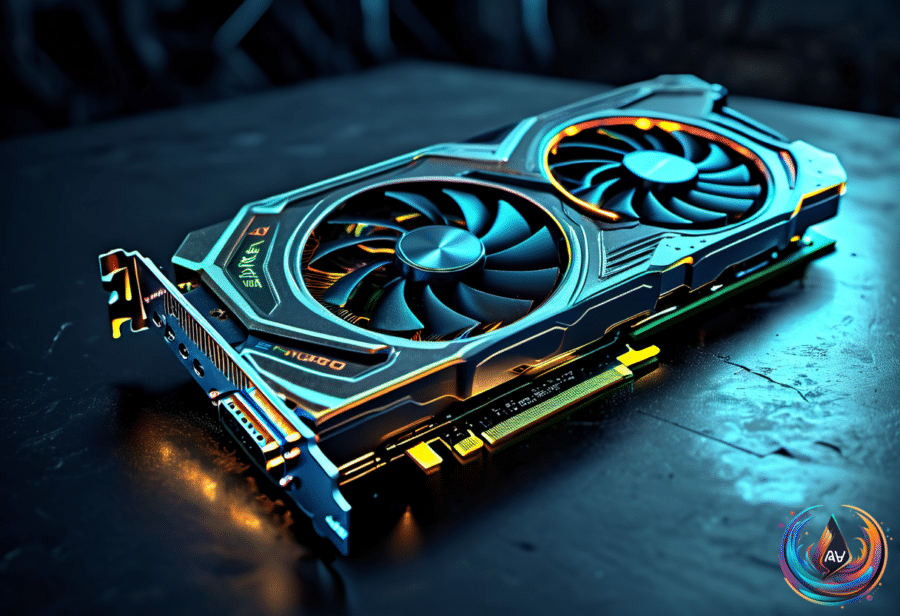
The GeForce 256 changed what a graphics card meant. In 1999, NVIDIA introduced its first GeForce product as the world’s first graphics processing unit, turning a hardware category into something that sounded as important as the computer’s central processor. The branding was bold, but the technology gave it substance.
The timing helped. The Wachowskis released The Matrix in March, Y2K dominated conversation, and the PC graphics market was beginning to settle into its modern shape. NVIDIA was one of three major players alongside 3dfx and ATI Technologies, while 3dfx remained the dominant force with its Voodoo line of 3D accelerators.
AMD had not yet bought ATI, and NVIDIA was still working to displace 3dfx. The company began chipping away at that lead with the RIVA TNT in 1998, followed by the TNT 2 in early 1999. The GeForce 256 arrived later that year, on October 11, and changed the contest.
The Hardware That Took Over the Graphics Pipeline
The GeForce 256 arrived just after Microsoft released DirectX 7.0 in late September. That made it the first video card to fully support the new API, but its key advantage was hardware transform and lighting, or T&L, which brought a new stage of 3D rendering into the card itself.
Before the GeForce 256, buyers were purchasing a graphics “accelerator.” The CPU handled the front half of the graphics pipeline: transforming 3D objects by moving their geometry in front of the game’s camera, then calculating how light affected each vertex. The 3D accelerator received that work and handled texturing and shading.
The GeForce 256 handled the entire process from start to finish. Once games used that capability, polygon budgets exploded, allowing developers to create far more detailed and realistic 3D graphics. Other companies had experimented with hardware T&L or completed parts of it, but NVIDIA brought the pieces together in one consumer product.
That distinction explains the GPU name. By calling the GeForce 256, and every GeForce card after it, a GPU, NVIDIA told consumers that graphics hardware deserved the same attention as the CPU. Today, NVIDIA controls as much as 95 percent of the gaming GPU market in recent years; in 1999, it was still fighting for position.
Performance Made the Marketing Believable
The GeForce 256 was not merely a clever label attached to a technical demo. NVIDIA sold SDR and DDR versions, and the DDR model showed what the new architecture meant in actual games such as Quake 3 Arena and Unreal Tournament, which arrived within a few weeks of each other at the end of that year.
In testing, the GeForce 256 DDR rendered the Quake 3 Arena demo at an average of 72.1 frames per second at 1,024 by 768 with 32-bit color enabled. The Creative Labs TNT2 Ultra, the best non-GeForce offering in the same comparison, averaged 44.8 frames per second at that resolution.
Owners of a Voodoo3 3000 had to play in 16-bit color because 3dfx did not design the Voodoo 3 family for 32-bit color. The performance gap was not an abstract advantage buried in a specification sheet; it appeared on screen, where buyers tend to make their final purchasing decision.
3dfx never released a graphics card with hardware T&L, and that failure contributed to the company’s demise. NVIDIA bought most of its assets in December 2000, while ATI avoided the same fate by releasing its first Radeon GPU in 2000. The market had picked a direction.
The original GeForce 256 had only 17 million transistors and up to 64MB of memory, depending on the model. The entry-level GeForce RTX 5050 has 16.9 billion transistors and 8GB of VRAM, a comparison that makes the 1999 card look tiny. Its importance came from moving the work, not from brute force.
That is why the GeForce 256 still matters. It made the GPU a product category, changed the division of labor between CPU and graphics hardware, and arrived with enough game performance to justify the promise. The hardware was modest by modern standards, but the idea was not.
Modern GPUs still face the same basic problem in a different form: hardware eventually works less well with rising software demands. Components can keep running until they physically fail, yet compatibility gaps can leave them obsolete for modern use. GPUs often fall out of favor every three to five years as gaming demands rise, which makes the GeForce 256’s architectural leap stand out even more.
For owners trying to extend a card’s useful life, basic maintenance still matters. Dust affects thermal performance, can push a card to lower clock speeds, and can shorten its lifespan, so cleaning every three to six months is a sensible schedule.
Safely removing a GPU means powering down the PC, unplugging its cables, switching the power supply to the “O” position, and holding the power button for about 30 seconds. Remove the PCIe power cables, loosen the screws, release the PCIe tab or latch, and pull the card out with both hands using even force.
Use compressed air or an air blower, keep the fans from spinning freely, and hold a compressed-air can upright. A microfiber cloth and 90 percent isopropyl alcohol can handle dust on the backplate and casing, but avoid catching the cloth on solder joints. Reinsert the card into the fastest PCIe slot, usually the top-most slot, and seat the power cables properly.
With regular cleaning, a current GPU can last for years. The GeForce 256 lasted longer in another sense: it changed what buyers expected a graphics card to be.
Based on
- The Reason NVIDIA’s First GPU Was So Iconic — engadget.com
- Is this the longest we have gone without serious GPU upgrades? | Ars OpenForum — arstechnica.com
- How To Safely Clean Your PC’s GPU To Avoid Damaging It In The Process — engadget.com
- Does Old Computer Hardware Ever Become Truly Useless? — engadget.com
- Anyone running an eGPU these days? | Ars OpenForum — arstechnica.com