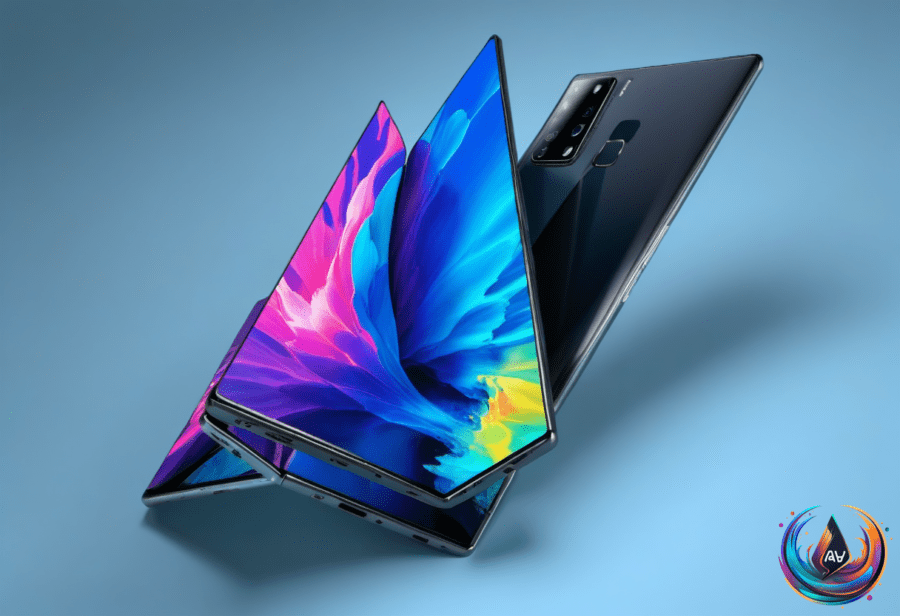
The Pixel 11 Pro Fold gets lighter without getting thin. Google’s $1,899 foldable weighs 238 grams, down from 258 grams for its predecessor, and measures 10.1mm when closed. That is progress, although the Galaxy Z Fold 8 weighs 201 grams at 9.7mm, while the Galaxy Z Fold 8 Ultra weighs 215 grams at 8.9mm.
The design brings one practical upgrade instead of a grand reinvention. The rear panel uses a glass fiber material that Google claims is “nearly impossible to crack,” according to Sam Rutherford, but the broader shape remains familiar.
“Google’s latest foldable sports some welcome upgrades, but its lack of a major design change is disappointing,” Rutherford wrote. That is the central problem: the Pixel 11 Pro Fold improves the hardware without making the device feel like a new category of foldable.
Brighter screens and serious camera hardware
The exterior display reaches a peak brightness of 3,600 nits, while the interior display measures 8 inches and reaches the same 3,600-nit peak. Peak brightness has increased from 3,000 to 3,600 nits, allowing for better outdoor visibility.
The camera system also receives substantial numbers, because smartphone specifications remain determined to turn photography into accounting. The main camera uses a 50MP sensor measuring 1/1.3 inches, while the 48MP telephoto lens can zoom up to 120x; the front camera is 42MP.
Google’s Pixel 11 Pro adds the new Magic Capture camera feature, though the available details do not explain how it works. The foldable’s headline camera hardware therefore looks strong on paper, even if the larger design story lacks the same ambition.
Battery choices and the wider Pixel 11 range
The Pixel 11 Pro Fold comes in two battery capacities: 4,850mAh for the smaller model and 5,115mAh for the XL model. With a 30W charger, the smaller model can reach 55 percent charge in around 30 minutes, while the XL can reach 75 percent with a 45W charger.
The Pixel 11 Pro and Pixel 11 Pro XL use Google’s Tensor G6 processor and Titan M3 security coprocessor. Google says its new chip delivers 25 per cent faster web browsing, 15 per cent quicker app launches and up to 20 per cent better power efficiency — the familiar promise that every new chip will make waiting feel less like waiting.
The standard Pixel 11 shares the series’ new edge-to-edge camera bar design. It has a 6.3-inch screen, a 48MP main camera, a 13MP ultrawide and a 10.8MP telephoto, plus a 4,985mAh battery, wired fast charging and Pixelsnap magnetic wireless charging at up to 25W.
The Pixel 11 costs £879 for 256GB and £999 for 512GB. It will be available for pre-order at Sky Mobile from £25 per month on a 36-month contract, giving buyers another route into Google’s 2026 lineup without paying the full upfront price.
The Pixel 11 Pro keeps the 6.3-inch LTPO OLED Super Actua display with a 3,600-nit peak brightness, a 50MP main camera, a 48MP telephoto with 120x zoom and a 42MP front camera. Its battery is 4,850mAh, and charging reaches 55 percent in around 30 minutes with a 30W charger.
The Pixel 11 Pro starts at £1,079 for 256GB, £1,199 for 512GB and £1,429 for 1TB. The Pixel 11 Pro XL starts at £1,279 for 256GB, £1,399 for 512GB and £1,629 for 1TB, with a 6.8-inch display, 3,600-nit peak brightness, a 5,115mAh battery and 75-percent charging with a 45W charger.
The Pixel 11 Pro and Pixel 11 Pro XL go on sale on 20 August, following the review published on 19 August. A limited-time trade-in deal ends on 1 September, so buyers have a short window to use it before the usual launch-period urgency expires.
The Pixel 11 Pro Fold offers lighter construction, tougher rear material, brighter screens and a capable camera setup. It still weighs more and measures thicker than the Galaxy Z Fold 8 and Galaxy Z Fold 8 Ultra, though, leaving Google with a familiar lesson in foldables: adding more is easier than changing the shape of the product.
Based on