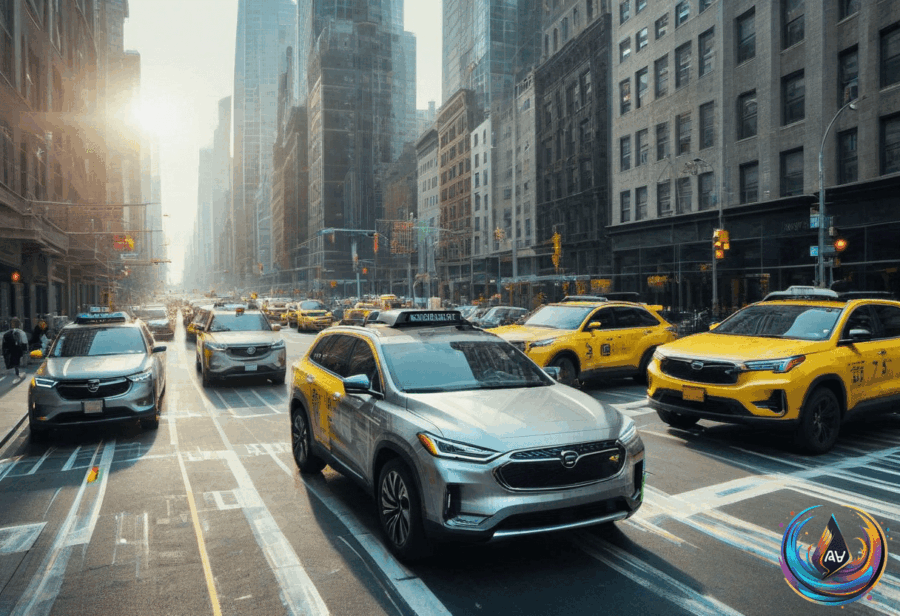
Waymo, the self-driving car company owned by Google, has not been able to start robotaxi service in New York City. Despite its huge success elsewhere, the company faces stiff opposition in the Big Apple. The main barrier? The city’s taxi industry and political leaders.
Waymo runs more than 500,000 paid rides every week across 10 cities in the US. It also raised $16 billion in February to fund expansion. The company is pushing forward with plans to launch cheaper robotaxis and aims for one million weekly rides by 2026. Yet, New York City remains off limits.
Waymo’s testing permit for New York City expired on March 31, 2026. They tested eight Jaguar I-PACE vehicles with safety drivers in Manhattan and downtown Brooklyn. No collisions happened during these tests. Still, the company cannot legally offer commercial rides in the city.
The city’s mayor, Zohran Mamdani, alongside powerful taxi lobbies and labor unions, blocked Waymo’s entry. The New York Taxi Workers Alliance, representing around 28,000 drivers, plays a big role. Over 100,000 for-hire vehicle drivers work in New York, generating billions annually. The taxi industry worries about losing business to robotaxis.
Political Roadblocks and Lobbying Battles
Governor Kathy Hochul pulled back a statewide robotaxi proposal in January 2026 after strong public and political pushback. This move slowed Waymo’s hopes of expanding in New York. The legislation needed to allow driverless cars has stalled in at least eight states, including New York, Virginia, Oregon, and Minnesota.
Waymo has spent at least $1.8 million lobbying New York state officials since 2019. Recently, it hired The Parkside Group for $15,000 per month to help with lobbying efforts. Despite this spending, the company has not won over enough support to start service in the city.
Justin Kintz, Waymo’s global head of public policy, said, “Our strategy remains the same. We want to meet people and governments where they are. And we know that some of them will take more time than others. But we’re committed to our strategy. We’re committed to earning trust.”
Waymo vs. Other Autonomous Vehicle Players
While Waymo struggles in New York, it is expanding internationally to Tokyo and London. Other companies have taken different paths. Tesla launched a limited robotaxi service in Austin, Texas. Amazon’s Zoox operates fully driverless cars in San Francisco and Las Vegas.
General Motors is rebuilding its autonomous vehicle program after shutting down Cruise, its self-driving division. Waymo, despite its $16 billion war chest and large ride volume, has yet to break into the country’s biggest taxi market.
The company has faced challenges with safety too. It issued its sixth recall after its robotaxis drove into highway construction zones 13 times across Phoenix and the San Francisco Bay Area. Still, Waymo pushes forward with new vehicle designs like the Ojai robotaxi, targeting even bigger ride numbers.
In New York, the taxi and for-hire vehicle industry remains a powerful force. It protects jobs for tens of thousands of drivers and brings in billions every year. For now, this industry has kept Waymo out. The company’s future in New York depends on whether it can win over city officials and unions in the long run.
Based on
- New York City has defeated Waymo, and the taxi lobby is the reason — thenextweb.com
- Why Waymo’s Self-Driving Taxis Are Stuck in New York City — xeber.world
- New York City blocks Waymo’s planned self-driving taxi rollout — newsbytesapp.com
- Waymo Raised $16B but Still Can’t Crack New York — businessmodelanalyst.com
- Waymo Has Been Defeated by New York City — futurism.com