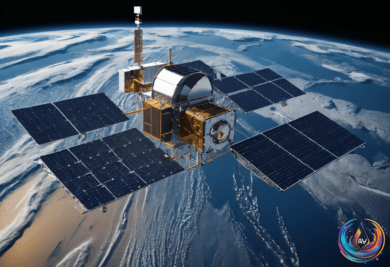
NASA is partnering with Relativity Space to launch a new Mars orbiter mission called Aeolus. The mission is set for 2028. It’s a big step in how space exploration is changing. Instead of doing everything alone, NASA is teaming up with private companies to speed up discovery.
Relativity Space, led by former Google CEO Eric Schmidt, will handle the spacecraft, rocket, and cruise operations. NASA will supply the science instruments. This split allows NASA to focus on science while Relativity takes care of the hardware and flight. It’s a smart way to combine expertise.
Aeolus will carry four main instruments. These will track winds, temperatures, dust, and clouds on Mars every day. The Doppler Wind and Temperature Sounder will map wind and temperature profiles. The Thermal Limb Sounder will observe vertical temperature changes and clouds. The Surface Radiometric Sensor Package will measure surface energy and dust. Finally, the Wide-Field Context Camera will snap daily global images of the Martian atmosphere.
All instruments come from NASA’s Ames Research Center in California. The data will help scientists understand Mars’ atmosphere better. This knowledge is crucial for future missions, especially those involving human landings. Dust storms and temperature shifts have been major challenges for landing safely on Mars.
A New Model for Space Exploration
This mission highlights a shift in how NASA approaches space. Instead of building and launching everything itself, NASA is outsourcing parts to private firms. This approach taps into commercial innovation and investment. It also could lead to faster, more frequent missions to Mars and beyond.
Relativity Space’s Interplanetary Sciences Program aims to make space science cheaper and more accessible. Aeolus is the first mission under this program. The orbiter will not only gather scientific data. It will also work as a communications hub. It will link Mars surface missions with Earth using laser and radio signals.
The spacecraft will have massive data storage and powerful computing capabilities. This could support AI models and autonomous operations on Mars. Such technology will be key to managing complex missions far from Earth, where communication delays are long.
Challenges and Future Prospects
Relativity Space has not released many technical details about the spacecraft yet. Including a radar instrument and advanced communication gear suggests it will be a hefty and power-hungry craft. Balancing size, weight, and power is a tough problem for any Mars mission.
The mission will launch aboard Relativity’s Terran R rocket, a reusable medium-class vehicle designed for scale and speed. The company stopped using its earlier Terran 1 rocket after just one flight to focus on Terran R. The rocket is still being tested, with its first launch expected around 2027, possibly delayed from late 2026.
Eric Schmidt’s leadership brings a fresh perspective. His background in tech and data centers could shape how Relativity develops space infrastructure. Schmidt also supports other space science projects, like a large space telescope planned to launch on Terran R rockets.
Before Aeolus, Relativity and Impulse Space had plans for a Mars lander mission. But updates on that project have slowed, showing how priorities can shift in fast-moving space ventures. Aeolus represents a new direction focused on orbital science and communications.
The NASA-Relativity partnership runs under a six-year Space Act Agreement. It ensures steady collaboration and project continuity. This long-term plan signals NASA’s commitment to working closely with private companies for major missions.
By combining NASA’s scientific expertise with Relativity’s commercial innovation, Aeolus aims to deliver more Mars science, more often. The mission will improve models of Martian weather and atmospheric conditions. This will help design safer landings and better surface operations for future missions, both robotic and human.
In short, Aeolus is more than just a Mars orbiter. It’s a sign of how space exploration is evolving. The future will likely see more partnerships like this. Together, they will unlock new discoveries and bring us closer to living on another planet.
Based on
- NASA is sending an orbiter to Mars with Eric Schmidt’s Relativity Space — engadget.com
- Mars Mission: Innovative Partnership – Newsroom Worldwide — newsroomworldwide.com
- Relativity Space to privately develop Mars orbiter mission (2026) — getitinbloodz.com
- NASA’s Mars Mission: Public-Private Partnership for Scientific Discovery (2026) — flatlandfilm.org
- Relativity Space to privately develop Mars orbiter mission – SpaceNews — spacenews.com